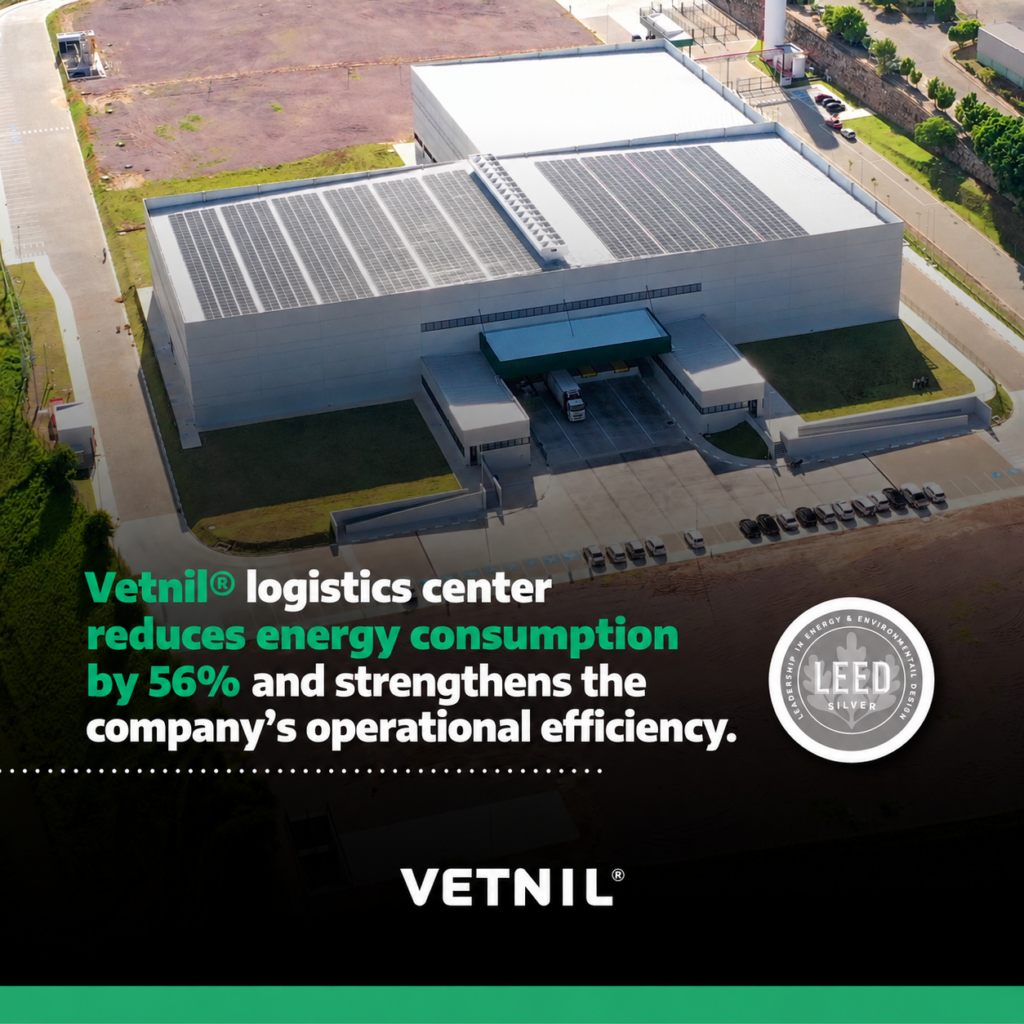
Inaugurated in 2024, the project—which holds LEED Silver certification—integrates solutions for energy and water management, workplace well-being, and the reduction of environmental impact.
In June—the month when the world turns its attention to World Environment Day—Vetnil® is once again highlighting initiatives focused on operational efficiency and the reduction of environmental impacts. Among these is the company’s logistics facility, opened in 2024 and designed to meet the criteria for LEED Silver (Leadership in Energy and Environmental Design) certification. The facility delivers significant gains in energy efficiency, water conservation, waste management, and indoor environmental quality, cementing sustainability as a strategic component of the company’s growth.
Located in Louveira (São Paulo state), the facility was created to integrate warehousing, distribution, and production areas into a single space, yielding simultaneous operational and environmental benefits. This centralization reduced rental and maintenance costs, optimized equipment handling, and expanded production capacity to meet current and future demand—all while incorporating construction and technological solutions aimed at minimizing environmental impact.
According to Edson Haro, Project Coordinator at Vetnil®, the pursuit of LEED Silver certification was driven by a commitment already embedded in the company’s strategic planning: to grow with environmental, social, and economic responsibility. The project adhered to international sustainability standards from the design phase onward, guiding decisions regarding engineering, architecture, and operations.
“Achieving LEED certification required great effort from our teams to meet the necessary criteria for the Silver level. We had to reorganize construction processes and make extensive use of sustainable materials—a key certification requirement. During the construction of the logistics center, we even analyzed details such as the type of faucets used and air exchange rates in locker rooms and restrooms, ensuring employees would benefit from a safe and sustainable environment,” notes Edson Haro.
Energy efficiency and reduction of environmental impacts
A key highlight of the construction is the photovoltaic plant installed on the facility’s roof, with an estimated generation capacity of 420 kWh. The initiative resulted in a reduction of approximately 59% in electricity bills, demonstrating that environmental efficiency and economic viability go hand in hand. Furthermore, the project’s energy performance indicates an approximate 56% reduction in energy consumption compared to the baseline scenario, representing estimated savings of around 65,000 kWh per year.
Water efficiency was also a priority for the new Vetnil® facility. The building achieved an approximate 43% reduction in indoor potable water consumption, thanks to the installation of efficient plumbing fixtures and a water reuse system.
Another highlight is construction waste management: approximately 89% of the waste generated was recycled or reused, significantly reducing the amount sent to landfills or incinerators.
Regarding sustainable mobility, the parking area includes spaces designated for electric vehicles, encouraging the shift toward technologies with lower environmental impact. The outdoor paving—featuring interlocking blocks and materials with high solar reflectance—helps mitigate the heat island effect and improves soil permeability.
A life-cycle analysis of the materials used in the project also revealed significant environmental benefits, including an approximate 6.6% reduction in global warming potential and a 5.5% reduction in ozone depletion potential compared to the baseline scenario.
According to Gabriela Damásio, Facilities Coordinator at Vetnil®, the logistics center’s LEED Silver certification reflects the company’s commitment to sustainability, safety, and efficiency. For her, closely overseeing this process was a challenging yet enriching experience that involved various departments and required intensive management and integration efforts. “We implemented solutions such as a photovoltaic plant and a rainwater harvesting and reuse system—collecting water from the roof—which contributes to the responsible use of natural resources and the maintenance of outdoor areas. This achievement represents more than just a certification; it is the result of a collective effort to create an environment that combines innovation, efficiency, and care for people,” states Gabriela.
Beyond the environmental and economic benefits, the project prioritized employee well-being. The interior environment was designed with a focus on thermal comfort, natural lighting, and air quality, meeting the requirements of the ASHRAE 62.1-2010 standard with a ventilation rate 30% higher than the required minimum.
The facility was also developed using a “Campus Project” approach, which allows future buildings on the site to pursue certification with some documentation and scoring already pre-approved—thereby expanding the potential for positive impact of upcoming expansions.
By integrating operational efficiency, innovation, and solutions aimed at reducing environmental impact, the project reinforces Vetnil®’s long-term vision of developing its operations responsibly and in alignment with current industry demands. At a time when World Environment Day is broadening discussions on corporate sustainability, this initiative highlights how infrastructure projects can contribute to more efficient and environmentally conscious operations.

Bem-vindo a Vetnil®
Usamos cookies para melhorar sua experiência.
Nós guardamos informações técnicas e analíticas do seu acesso e navegação em nosso site.